

-
Welcome to the Community Forums at HiveWire 3D! Please note that the user name you choose for our forum will be displayed to the public. Our store was closed as January 4, 2021. You can find HiveWire 3D and Lisa's Botanicals products, as well as many of our Contributing Artists, at Renderosity. This thread lists where many are now selling their products. Renderosity is generously putting products which were purchased at HiveWire 3D and are now sold at their store into customer accounts by gifting them. This is not an overnight process so please be patient, if you have already emailed them about this. If you have NOT emailed them, please see the 2nd post in this thread for instructions on what you need to do
You are using an out of date browser. It may not display this or other websites correctly.
You should upgrade or use an alternative browser.
You should upgrade or use an alternative browser.
Songbird Remix's Product Preview Thread
- Thread starter Ken Gilliland
- Start date
All 3 Freebie are out too...

Ok, thanks, Mr. Gilliland, I'll be waiting for Songbird Remix: PhilippinesI hadn't considered the Philippines, but I'll take a look
I already have a number of birds from the Philippines; they're just not all in one set...
- Masked Booby (SBRM Australia v3/SBRM Hawaii/SBRM Seabirds v3)
- Comb-crested Jacana (SBRM Australia v3/SBRM Jacanas)
- Coppersmith Barbet (SBRM Barbets)
- Blue-tailed Bee-eater (SBRM Bee-eaters)
- Common Kestrel (SBRM Birds of Prey v1)
- Peregrine Falcon (SBRM Birds of Prey v1)
- Chinese Sparrowhawk (SBRM Birds of Prey v2)
- Philippine Eagle (SBRM Birds of Prey v4)
- Crested Serpent-eagle (SBRM Birds of Prey v4)
- White-bellied Sea Eagle (SBRM Birds of Prey v5)
- Changeable Hawk-eagle (SBRM Birds of Prey v6)
- Rufous-bellied Eagle (SBRM Birds of Prey v6)
- Red Crossbill (SBRM Cool and Unusual Birds v1)
- Luzon Bleeding-heart (SBRM Cool and Unusual Birds v3)
- Pink-necked Green-pigeon (SBRM Cool and Unusual Birds v3)
- Chestnut-breasted Malkoha (SBRM Cuckoos)
- Common Emerald Dove (SBRM Gamebirds v3)
- Spotted Dove (SBRM Gamebirds v3)
- Zebra Dove (SBRM Gamebirds v3)
- Superb Fruit-dove (SBRM Gamebirds v3)
- Great Frigatebird (SBRM Hawaii)
- Common Kingfisher (SBRM Kingfishers)
- Black-backed Dwarf Kingfisher (SBRM Kingfishers)
- Common Hill Myna (SBRM Mynas)
- Philippine Oriole (SBRM Orioles of the Old World)
- White-lored Oriole (SBRM Orioles of the Old World)
- Isabela Oriole (SBRM Orioles of the Old World)
- Black-naped Oriole (SBRM Orioles of the Old World)
- Oriental Bay Owl (SBRM Owls of the World v2)
- Elegant Tit (SBRM Paridae of the World)
- Red and Blue Lory (SBRM Parrots of the World v1)
- Red-vented Cockatoo (SBRM Parrot of the World v4)
- Spot-billed Pelican (SBRM Pelicans of the World)
- Small Buttonquail (SBRM Petshop)
- Sooty Tern (SBRM Seabirds v3)
- Spoon-billed Sandpiper (SBRM Shorebirds v3)
- Chinese Egret (SBRM Shorebirds v4)
- Oriental Stork (SBRM Shorebirds v4)
- Asian Wooly-necked Stork (SBRM Shorebirds v5)
- Little Spiderhunter (SBRM Spiderhunters)
- Orange-tufted Spiderhunter (SBRM Spiderhunters)
- Pale Spiderhunter (SBRM Spiderhunters)
- Naked-faced Spiderhunter (SBRM Spiderhunters)
- Scarlet-collared Flowerpecker (SBRM Threatened, Endangered, Extinct v3)
- Little Grebe (SBRM Waterfowl v4)
Last edited:


The thing about birds is... they are the most common wildlife experience almost everybody has. You look through a window, walk outside and chances are you're going to see a bird. They are pretty much a given on almost any exterior render I do
A big thank-you to all you that participated in my Audubon sale.
I thought I'd take a short break after the sale (and those 5 new products) but evidently not... I already have my mid-to-late May release done... it's a bookend to my Orioles set entitled "Orioles of the Old World".
Here's the Hooded Pitohui, one of the only poisonous birds in the world and found in New Guinea.
In 1990, scientists preparing the skins of the Hooded Pitohui for museum collections experienced numbness and burning when handling them. It was reported in 1992 that this species and some other pitohuis contained a neurotoxin called homobatrachotoxin, a derivative of batrachotoxin, in their tissues. This led to them being more broadly known outside New Guinea, considered by some to be the first documented poisonous birds, other than some reports of coturnism caused by consuming quail (although toxicity in quails is unusual), and the first bird discovered with toxins in the skin. The same toxin had previously been found only in Central and South American poison dart frogs from the genera Dendrobates, Oophaga and Phyllobates (family Dendrobatidae). The batrachotoxin family of compounds are among the most toxic compounds by weight in nature, being 250 times more toxic than strychnine. Later research found that the hooded pitohui had other batrachotoxins in its skin, including batrachotoxinin-A cis-crotonate, batrachotoxinin-A and batrachotoxinin-A 3′-hydroxypentanoate.
Poisonous pitohuis, including the hooded pitohui, are not thought to create the toxic compound themselves but instead sequester them from their diet. The presence of the toxins in the internal organs as well as the skins and feathers rule out the possibility that the toxins are applied topically from an unknown source by the birds. One possible source has been identified in the forests of New Guinea: beetles of the genus Choresine (family Melyridae), which contain the toxin and have been found in the stomachs of Hooded Pitohuis.
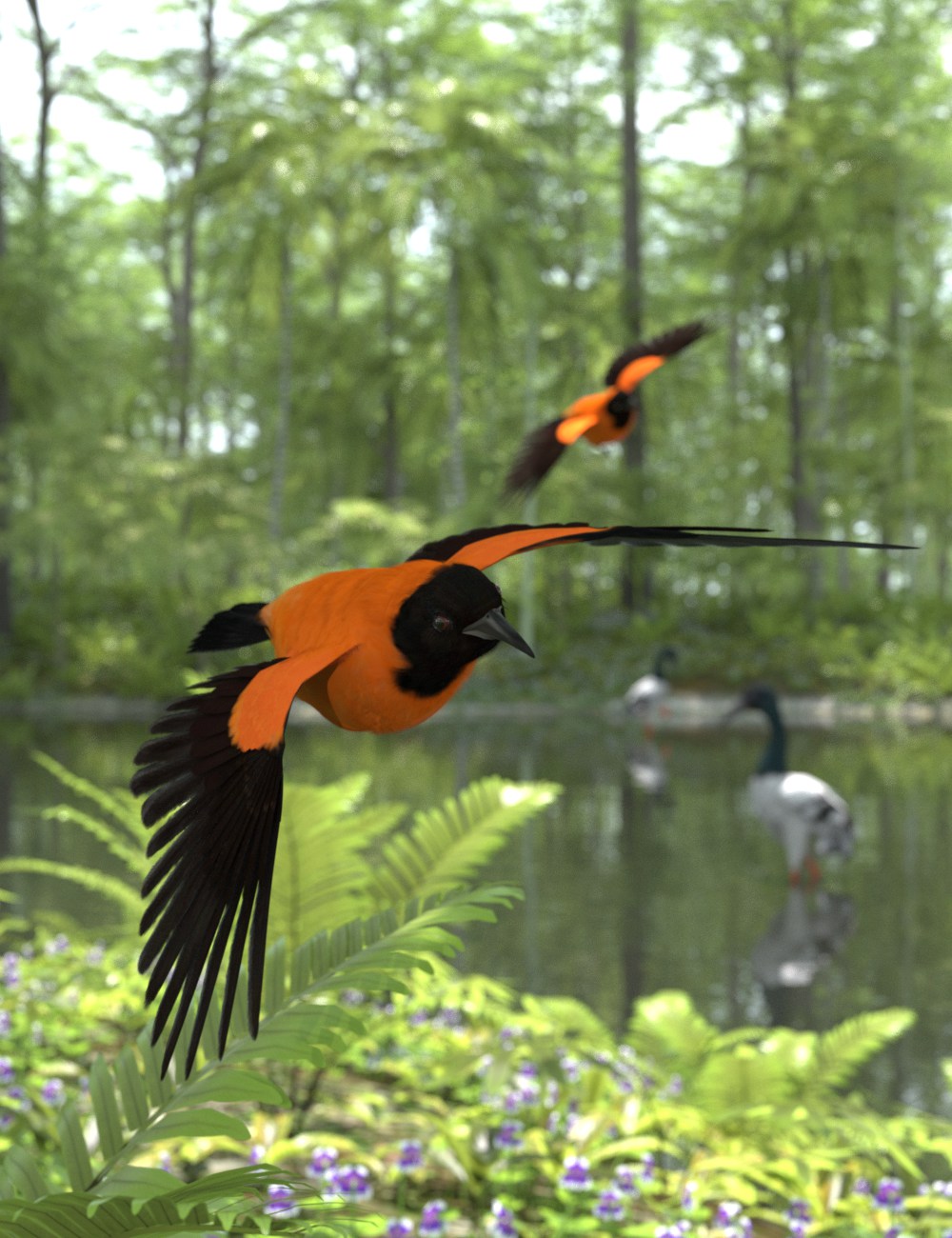
I thought I'd take a short break after the sale (and those 5 new products) but evidently not... I already have my mid-to-late May release done... it's a bookend to my Orioles set entitled "Orioles of the Old World".
Here's the Hooded Pitohui, one of the only poisonous birds in the world and found in New Guinea.
In 1990, scientists preparing the skins of the Hooded Pitohui for museum collections experienced numbness and burning when handling them. It was reported in 1992 that this species and some other pitohuis contained a neurotoxin called homobatrachotoxin, a derivative of batrachotoxin, in their tissues. This led to them being more broadly known outside New Guinea, considered by some to be the first documented poisonous birds, other than some reports of coturnism caused by consuming quail (although toxicity in quails is unusual), and the first bird discovered with toxins in the skin. The same toxin had previously been found only in Central and South American poison dart frogs from the genera Dendrobates, Oophaga and Phyllobates (family Dendrobatidae). The batrachotoxin family of compounds are among the most toxic compounds by weight in nature, being 250 times more toxic than strychnine. Later research found that the hooded pitohui had other batrachotoxins in its skin, including batrachotoxinin-A cis-crotonate, batrachotoxinin-A and batrachotoxinin-A 3′-hydroxypentanoate.
Poisonous pitohuis, including the hooded pitohui, are not thought to create the toxic compound themselves but instead sequester them from their diet. The presence of the toxins in the internal organs as well as the skins and feathers rule out the possibility that the toxins are applied topically from an unknown source by the birds. One possible source has been identified in the forests of New Guinea: beetles of the genus Choresine (family Melyridae), which contain the toxin and have been found in the stomachs of Hooded Pitohuis.
Yes, the entire Oriolus family are all "Old World" orioles... the "New World" orioles belong the Icterus family which are associated with New World BlackbirdsWow, that's cool. Question: Is the Philippine oriole (Oriolus steerii) or the grey-throated oriole also an Old World oriole?

Hawks will do that... but to the hawk's defense, I believe the actual word, "budgerigar" is Aboriginal for "good to eat"the wife got spooked this morning out the backyard when a white hawk came down and landed on our double budgie cage, obviously it was after some brekky but with the wife yelling and waving it immediately took off.... but it won't forget.
A group of m/f Eurasian Golden Orioles... they are found in western, central and southern Europe (south from southern Finland) and northern Africa (Morocco to Tunisia) eastward to the Altai Mountains (southern Siberia, western Mongolia and extreme northwestern China) and, in the south, to northern Iran and locally to the northern Arabian Peninsula; non-breeding in sub-Saharan Africa.
They are omnivorous, eating mainly small invertebrates and fruits. Females look similar to male but are more greenish-yellow with fainter eye markings and the striped breast.
This species has the latin name Oriolus oriolus. The name "oriole" was first used in the 18th century and is an adaptation of the scientific Latin genus name, which is derived from the Classical Latin "aureolus" meaning golden. Various forms of "oriole" have existed in Romance languages since the 12th and 13th centuries. Albertus Magnus used the Latin form oriolus in about 1250 and erroneously stated that it was onomatopoeic because of the golden oriole's song. In medieval England, its name, derived from the song, was the woodwele.
They are omnivorous, eating mainly small invertebrates and fruits. Females look similar to male but are more greenish-yellow with fainter eye markings and the striped breast.
This species has the latin name Oriolus oriolus. The name "oriole" was first used in the 18th century and is an adaptation of the scientific Latin genus name, which is derived from the Classical Latin "aureolus" meaning golden. Various forms of "oriole" have existed in Romance languages since the 12th and 13th centuries. Albertus Magnus used the Latin form oriolus in about 1250 and erroneously stated that it was onomatopoeic because of the golden oriole's song. In medieval England, its name, derived from the song, was the woodwele.
Attachments
-
 Eurasian Golden Orioles.jpg332.2 KB · Views: 102
Philippine and Isabela Orioles along with an Asian Wooly-necked stork...
The Isabela Oriole (left, all yellow) is endemic to Luzon in the Philippines. There are 50-249 mature individuals left with a decreasing population. The species is suspected to be declining at an unquantified rate owing to the extensive loss of forest habitat on Luzon. Organizations such as Buhay-Ilang, ORIS Project and the Mabuwaya Foundation are working to conserve them with educational programs and festivals celebrating this bird. The oriole is now a Flagship species for the North Sierra Madre National Park.
The Philippine Oriole (right) is found throughout the Philippines. There are <10,000 mature individuals with a decreasing population. Deforestation in the Philippines continues throughout the country due to slash and burn farming, mining, illegal logging and habitat conversion. This species is still trapped for the pet trade. It is found in multiple protected areas such as Pasonanca Natural Park, Rajah Sikatuna Protected Landscape, Northern Negros Natural Park and Samar Island Natural Park but like all areas in the Philippines, protection is lax and deforestation continues despite this protection on paper.
The near-threatened Asian Wooly-necked Stork (center) has between 50,000-249,999 mature adults left with a declining population trend. It is threatened by the same reasons the orioles are.
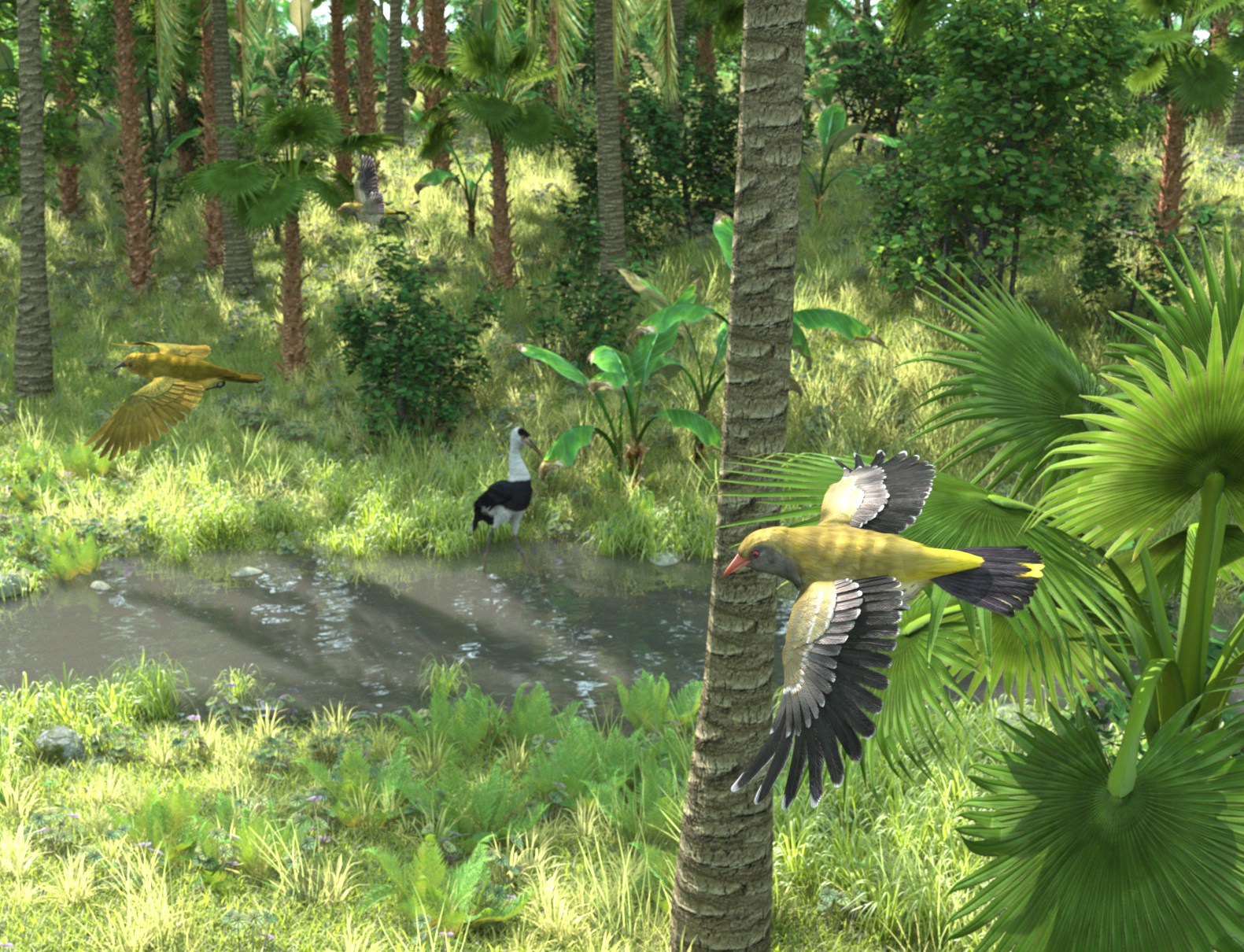
The Isabela Oriole (left, all yellow) is endemic to Luzon in the Philippines. There are 50-249 mature individuals left with a decreasing population. The species is suspected to be declining at an unquantified rate owing to the extensive loss of forest habitat on Luzon. Organizations such as Buhay-Ilang, ORIS Project and the Mabuwaya Foundation are working to conserve them with educational programs and festivals celebrating this bird. The oriole is now a Flagship species for the North Sierra Madre National Park.
The Philippine Oriole (right) is found throughout the Philippines. There are <10,000 mature individuals with a decreasing population. Deforestation in the Philippines continues throughout the country due to slash and burn farming, mining, illegal logging and habitat conversion. This species is still trapped for the pet trade. It is found in multiple protected areas such as Pasonanca Natural Park, Rajah Sikatuna Protected Landscape, Northern Negros Natural Park and Samar Island Natural Park but like all areas in the Philippines, protection is lax and deforestation continues despite this protection on paper.
The near-threatened Asian Wooly-necked Stork (center) has between 50,000-249,999 mature adults left with a declining population trend. It is threatened by the same reasons the orioles are.
Here's my Green-headed oriole at a watering hole along with some African Spoonbills, an African Wooly-necked Stork and some Grévy's zebras. It was fun to add in my Grevy's Zebras which I haven't used since I created the texture for them way back in 2000 (Renderosity image: Water Rights - it's a little scary to see my Rendo Gallery goes back that far lol)
The Green-headed Oriole has a fragmented distribution, restricted to lowland and mid-altitude forests in the Eastern Arc Mountains in Tanzania, three isolated mountains in northern Mozambique, and two highlands in southeastern Malawi. In addition, it occurs in a few lowland coastal forests in the extreme southeast of Kenya. Its natural habitats are subtropical or tropical, dry lowland forests and subtropical or tropical moist montane forests.
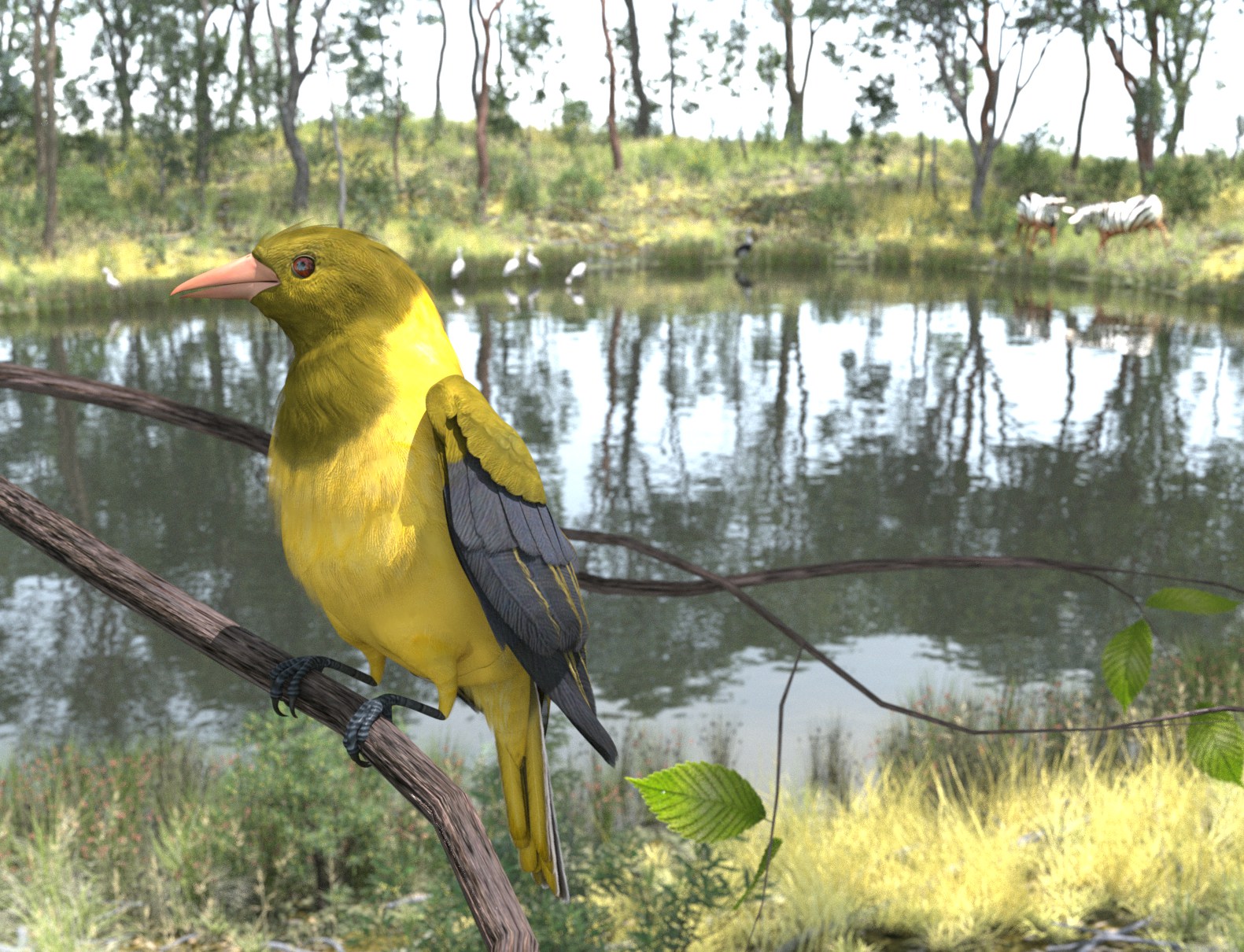
The Green-headed Oriole has a fragmented distribution, restricted to lowland and mid-altitude forests in the Eastern Arc Mountains in Tanzania, three isolated mountains in northern Mozambique, and two highlands in southeastern Malawi. In addition, it occurs in a few lowland coastal forests in the extreme southeast of Kenya. Its natural habitats are subtropical or tropical, dry lowland forests and subtropical or tropical moist montane forests.

Orioles of the Old World is out!
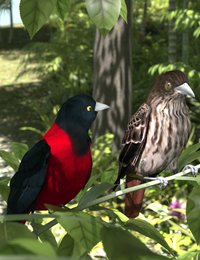
Here's the male and female Maroon Orioles, found in Bangladesh, Bhutan, Cambodia, India, Laos, Myanmar, Nepal, Taiwan, Thailand, Tibet, and Vietnam. In India, it is found from Himachal Pradesh east to Arunachal Pradesh and the hills of Manipur.
Here's the male and female Maroon Orioles, found in Bangladesh, Bhutan, Cambodia, India, Laos, Myanmar, Nepal, Taiwan, Thailand, Tibet, and Vietnam. In India, it is found from Himachal Pradesh east to Arunachal Pradesh and the hills of Manipur.
Attachments
-
 Maroon Orioles.jpg239 KB · Views: 56
Last edited:

oops, yes...... male and female